AI Agent Development
AI agents in production. Real engineering, not a prompt wrapper
point defined before the build
prioritized in up to 4 weeks
and a kill switch in production
The problem
Why most agents never leave the pilot
Most agent initiatives stall at the demo. The reason is rarely the model — it's engineering. Without architecture, observability, and control, the pilot impresses and never enters the operation.
A prompt wrapper, not a system
A prompt tied to an API isn't an agent. Without typed tools, memory, and verification, it breaks on the first case off-script.
A pilot that never ships
It's missing what real software needs: integration with existing systems, an audit trail, error handling, and an operations plan.
Risk without control
An agent acting alone on a sensitive decision, with no human at the right point and no trail, is a liability, not an asset.
No business metric
With no economic result attached and no cancellation point, no one knows whether the agent pays for itself.
What a real agent is
More than a chatbot with tools
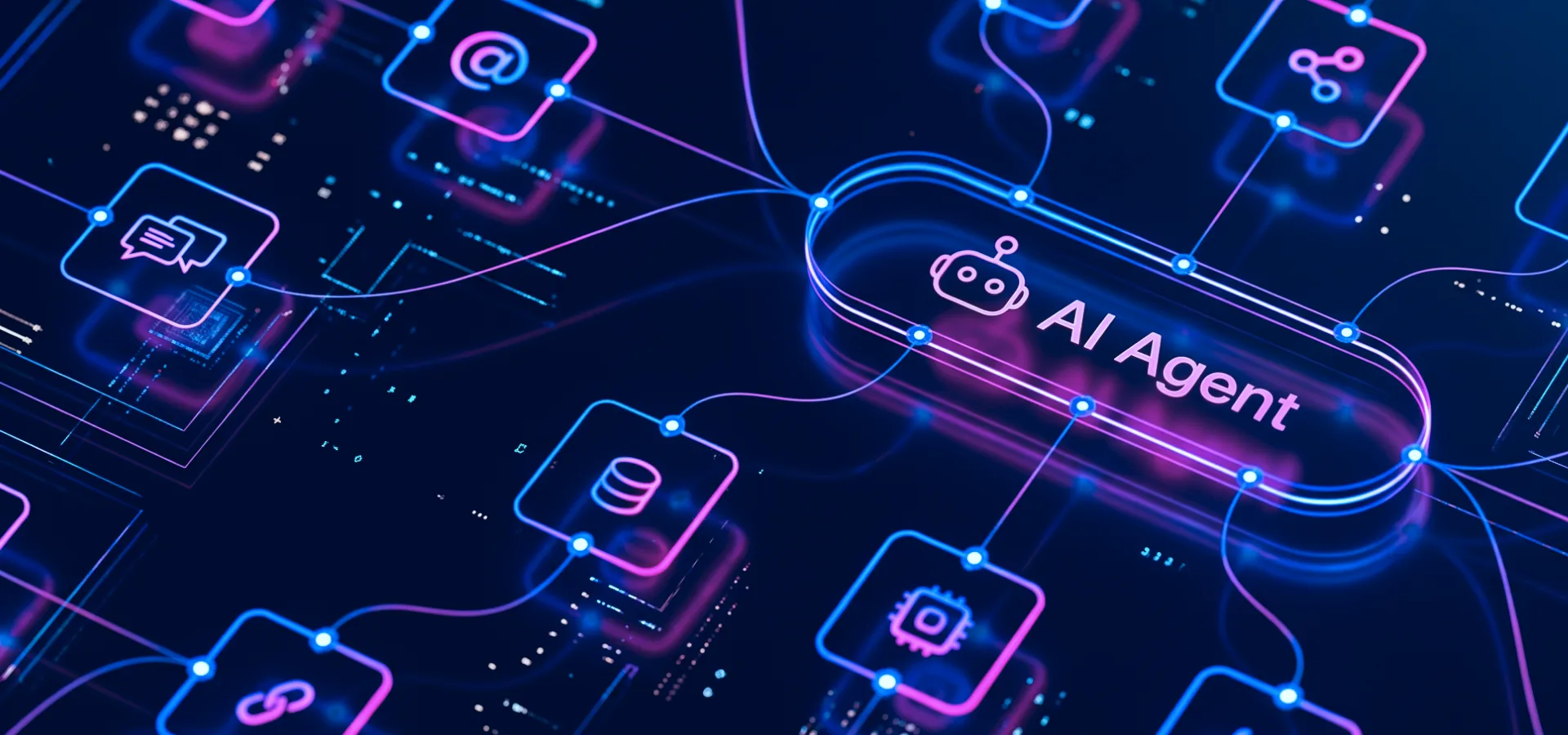
An agent doesn't answer a question. It owns an outcome. Triggered by an event, it drives the case from start to finish, decides which tools to call as it discovers, self-corrects when the evidence contradicts it, and keeps state across steps.
- Trigger
- Orchestrator
- Typed tools via MCP
- RAG with source citation
- Independent verifier
- Human in control
- Persistent state
The agents we build
We don't sell “AI capability.” We build agents that take on an outcome. These are real archetypes, already designed by Luby, with examples in production by sector. Each one is a starting point for your operation's first agent.
Sentinels
Watch 24/7 and fire on their own
They watch a stream without stopping and open their own case when a signal crosses the threshold.
Queue resolvers
Own a live queue, close the case
They consume a queue item by item, handle each case to the end, and escalate only the exception.
Multi-agent desks
Orchestrator, specialists, and a verifier
A coordinator distributes the work among specialists, and a verifier challenges the conclusions before consolidating.
Long-journey drivers
Persistent state across days
They own an outcome that takes days, hold the state, pause waiting on a data point, and resume.
Copilots
The human in command
They amplify a person's decision in real time, without taking control away from them.
Document structurers
Reliable data out of chaos
They turn dense, heterogeneous documents into structured data, with source citation and per-field confidence.
From diagnosis to an agent in production
You work with a team that understands AI engineering and operations. We start with the right problem, not with the technology.
01
We map the operation
Processes, data, and systems analyzed to find where an agent creates the most value with the least risk.
02
We choose the first agent
The initiative that combines economic impact, technical feasibility, and speed of adoption. Before the build, we define the business metric and the cancellation point.
03
We build with dedicated squads
Spec first, code second. Typed tool-calling, RAG with source citation, and a human in control of irreversible actions.
04
We ship to production and evolve
Live in production with observability, an audit trail, and expansion to new processes.
Safe production
How we ship to production safely
What separates an agent that impresses in a demo from one that runs in the operation without becoming a liability.
Hard value limits
Above the defined ceiling, the human gate is mandatory, regardless of the confidence score.
Risk-based escalation
Signs of fraud, legal effect, or strong dissatisfaction force human review, even in seemingly clear cases.
Fully auditable
Every decision lands in the log with the hypothesis tested and the evidence. A real requirement in regulated sectors.
No “Large Singleton”
The task is decomposed into specific tools and agents, instead of one overloaded agent no one can debug.
Security and compliance by design
Security review, automated testing, and compliance validation before touching your infrastructure.
- OWASP
- SOC 2
- GDPR
- PCI-DSS
- ISO/IEC 27001
- ISO/IEC 27701
Stack
The architecture that holds the agent up
Frameworks and infrastructure chosen by use case, not by hype. The layers we take an agent to production with.


.svg)

.svg)



.svg)
.svg)
.svg)


Internal APIs via MCP
LLM as verifier, authority limits
Industries
Where we apply it
Our deepest experience is in financial services, where we ship complex software for banks, fintechs, payments, and lending. We take agents to production in demanding sectors.
Common questions about agents
Industries
Where this already runs
The sectors this work shows up in most. See how it plays out in each.
Get started
Let's find your operation's first agent
Share your challenge. You'll leave the conversation knowing which agent to build first and why, with a metric and a cancellation point proposed.